
News & insights

Patient Disease

HEPATITIS

Hepatitis is an inflammation of the liver. The condition can be self-limiting or can progress to fibrosis (scarring), cirrhosis or liver cancer. Hepatitis viruses are the most common cause of hepatitis in the world but other infections, toxic substances (e.g. alcohol, certain drugs), and autoimmune diseases can also cause hepatitis. There are 5 main hepatitis […]


View more

GALLSTONES

Gallstones are hard deposits in your gallbladder, a small organ that stores bile, which is a digestive fluid made in the liver. Gallstones are hard deposits in your gallbladder, a small organ that stores bile, which is a digestive fluid made in the liver. Gallstones may consist of cholesterol, salt, or bilirubin. Gallstones range in […]

View more

PANCREATITIS

The pancreas is a large gland behind the stomach and next to the small intestine. The pancreas does two main things: It releases powerful digestive enzymes into the small intestine to aid the digestion of food.It releases the hormones insulin and glucagon into the bloodstream. These hormones help the body control how it uses food for energy. Pancreatitis is a disease in which the […]

View more

PANCREATIC STONES

The pancreas is a large gland behind the stomach and next to the small intestine. The pancreas does two main things: It releases powerful digestive enzymes into the small intestine to aid the digestion of food.It releases the hormones insulin and glucagon into the bloodstream. These hormones help the body control how it uses food for energy. Pancreatic stones develop from calcium deposits […]

View more

JAUNDICE

Jaundice, also known as icterus, is a term used to describe a yellowish tinge to the skin and sclerae (the white part of the eye) that is caused by hyperbilirubinemia (an excess of bilirubin in the blood). Body fluids may also be yellow. The color of the skin and sclerae varies depending on levels of bilirubin; […]

View more

BURSITIS

Vomiting and nausea The bursa is a sac filled with lubricating fluid, located between tissues such as bone, muscle, tendons, and skin, that decreases rubbing, friction, and irritation. Bursitis is the inflammation or irritation of the bursa. There are more than 150 bursae in the human body. Bursitis most often affects the bursa at joints […]

View more

RHEUMATIC HEART DISEASE (RHD)

Rheumatic heart disease (RHD) is the most common acquired heart disease in children in many countries of the world, especially in developing countries.The global burden of disease caused by rheumatic fever currently falls disproportionately on children living in the developing world, especially where poverty is widespread. RHD is a chronic heart condition caused by rheumatic […]

View more

PIMPLE

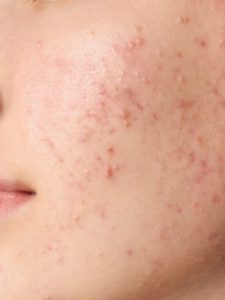
A pimple is a small pustule or papule. Pimples are small skin lesions or inflammations of the skin – they develop when sebaceous glands (oil glands) become clogged and infected, leading to swollen, red lesions filled with pus. Pimples are also known as spots or zits. The development of pimples is primarily connected to oil […]

View more

ECZEMA

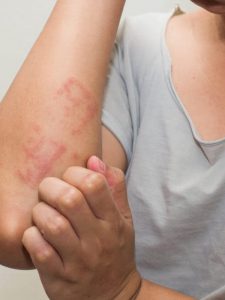
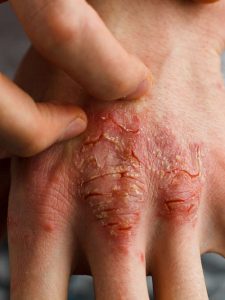
Eczema is a generalized term that encompasses various inflammatory skin conditions. It is used synonymously with the term “Dermatitis” which means superficial inflammation of the skin (epidermis) that can be acute, chronic and recurring; can have a number of causes. Atopic dermatitis is another term used to define eczema. Eczema is characterized by very distinctive […]

View more

URTICARIA

Hives also known as urticaria, is a kind of skin rash with red, raised, itchy bumps. They may also burn or sting. Often the patches of rash move around. Typically they last a few days and do not leave any long lasting skin changes. Less than 5% of cases last for more than six weeks. […]

View more

PSORIASIS

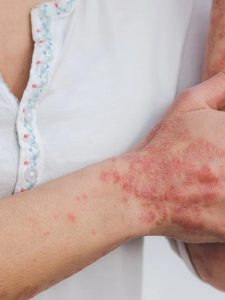
Psoriasis is a long-lasting autoimmune disease which is characterized by patches of abnormal skin. These skin patches are typically red, itchy, and scaly. They may vary in severity from small and localized to complete body coverage URTICARIA noncontagious skin condition that produces plaques of thickened, scaling skin. The dry flakes of skin scales are thought […]

View more

VITILIGO

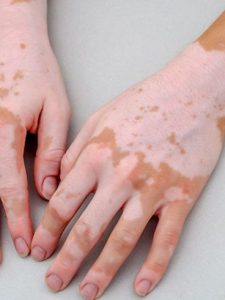
Vitiligo is a chronic skin condition characterized by portions of the skin losing their pigment.This happens because the cells that make pigment (color) in the skin are destroyed. These cells are called melanocytes. Vitiligo can also affect the mucous membranes (such as the tissue inside the mouth and nose) and the eye. VitiligoThe exact cause […]

View more